Design as Everyday Theatre:
UX Beyond the Screen
Instructor: Yvette Shen ( •᷄ᴗ•́) Teaching Assistants: Borami Kang, Valeska Tan
This sophomore studio explores UX as something that unfolds across screens, spaces, and everyday situations. Working in interdisciplinary teams, students in Visual Communication Design and Experiential Media Design create hybrid experiences that bring together a 2D interface, a spatial interaction in a real environment, and a simple generative behavior that changes with context.
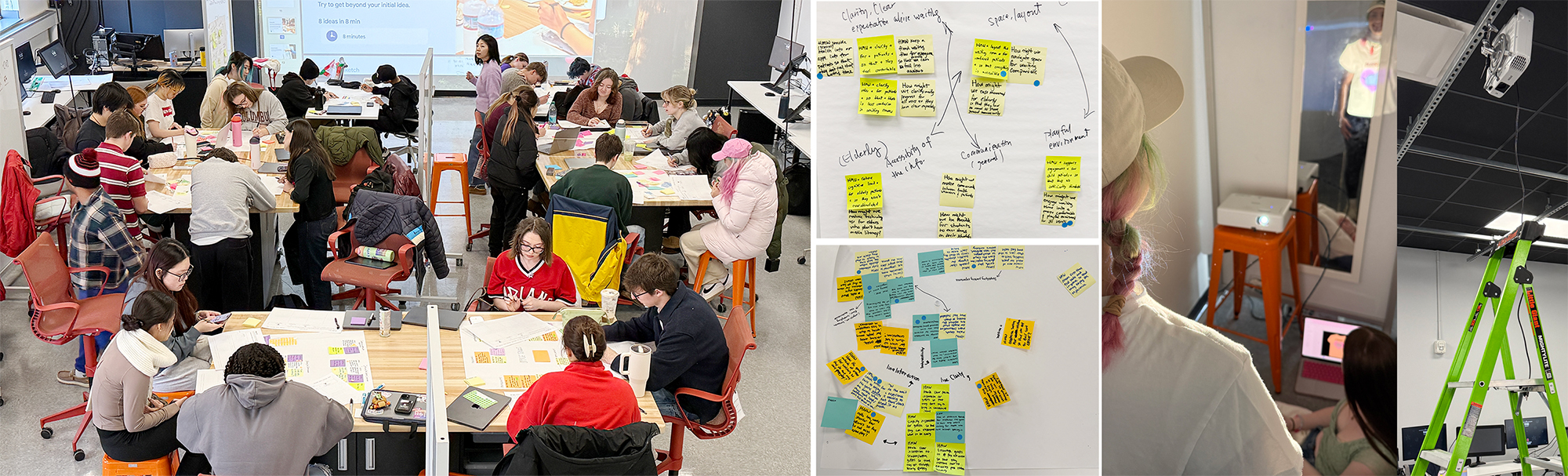
Each team works within an instructor-assigned environment, such as a restaurant, airplane, library, retail store, hospital or clinic, stadium, office, or a speculative space imagined by the students. The work begins with observation-based research. Students look closely at how people move, wait, decide, interact, and adapt within these settings, using real behaviors and conditions to guide their ideas.
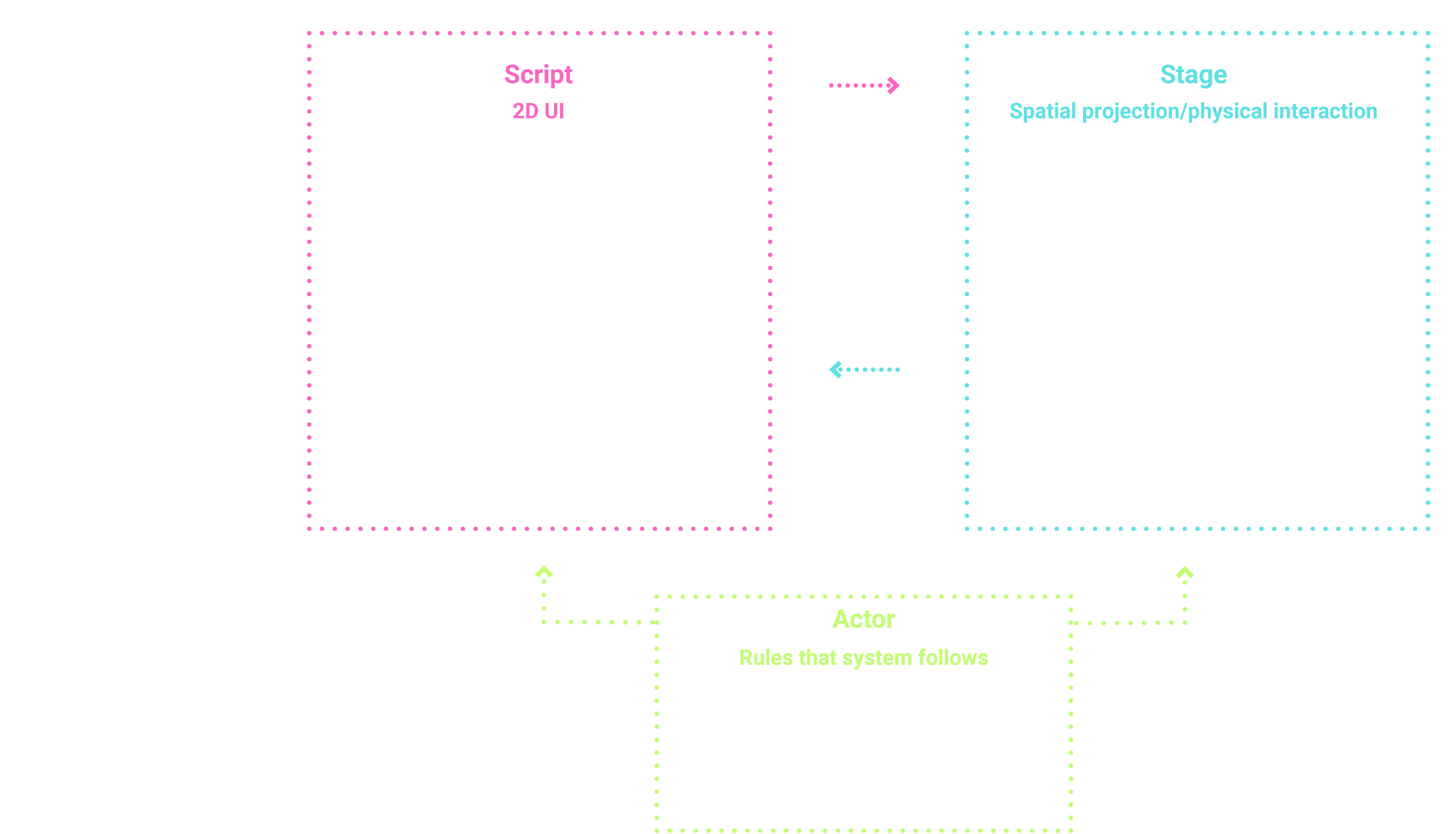
From there, each project is developed through three connected parts. The Script is a 2D interface prototyped in Figma that helps users understand what is happening and make choices. The Stage extends that experience into space through projection mapping, movement, physical cues, props, and environmental conditions. The Actor introduces a small generative element, allowing the system to respond differently based on user input, timing, or changing context.
Learning Touchpoints
Through research, prototyping, and interdisciplinary collaboration, students develop skills in:
Research and Human-centered Design
understanding users, tasks, and needs
observation research in real environments
identifying patterns, behaviors, friction points, and opportunities
turning research insights into design decisions
building personas, journey maps, and other UX research artifacts
UI and UX Design
information architecture, user flows, and experience structure
visual hierarchy, usability, and interface clarity
core UX principles and laws
designing 2D interfaces and prototypes in Figma
Spatial and System Design
designing projected and embodied experiences in real environments
Wizard-of-Oz prototyping to test ideas before implementation
system thinking across devices, environments, and human behaviors
Communication and Collaboration
documenting UX process, decisions, and outcomes clearly
collaborating in interdisciplinary teams
Using Wizard-of-Oz prototyping, students simulate system behavior before technical implementation. This allows them to test, refine, and communicate how the experience works across both digital and physical touchpoints. Throughout the semester, the focus stays on research-driven design, using observed behavior and iterative testing to shape experiences that are clear, meaningful, and grounded in real contexts.